Seedance 2.5 Tested: What $4,000 of Pre-Release Generations Taught Me About AI UGC Ads (2026)
Ori Silver
·
Co-founder, Maxfusion AI
·

For the full walkthrough of Seedance 2.5 meta prompting, the comparison to 2.0, the AI UGC realism examples, and the full breakdown, check out the YouTube video: Seedance 2.5 is Live - Here’s Everything You Need To Know About Ad Making!
Seedance 2.5 dropped yesterday. I had access before the release, and I put more than $4,000 in generations through it before most people had seen a single output. At Maxfusion AI we see tens of thousands of ad generations every month, so I know which formats and frameworks agencies and brands are actually running in AI ads right now. I took 2.5 through all of them.
The short version: it one-shots UGC ads I could not tell apart from real phone footage. The same-face problem that defined Seedance 2.0 is gone. And there is one prompting shift that decides whether you get that result or expensive slop.
The last release that moved the ceiling like this was Sora 2 Pro. This article covers what changed, where 2.5 breaks, and the prompt structure most of that $4,000 went into finding.
What changed from Seedance 2.0
Both models are multimodal. The differences are in capacity, and every one of them changes how you plan a generation.
References went to fifty. Seedance 2.5 accepts up to fifty reference inputs: character refs, product shots, scene refs, shot cues, audio mood. You are no longer attaching one product image and hoping. You are basically handing the model a full creative brief as assets.
Clips went from 15 to 30 seconds in a single shot. A one-minute ad is now two generations instead of four clips you have to stitch together. Every stitch point is a chance for faces to drift or lighting to jump between clips, so cutting the stitch count in half matters more than the runtime itself.
Output resolution is 720p for now. That is a step down from 2.0’s 1080p, and it is the one spec where this release moves backwards. For feed placements the realism carries it, but know the number before you plan a campaign around it.
It has video editing built in. Region-level edits on a finished video: when one element of an otherwise perfect take is broken, you fix that region instead of re-rolling the whole clip. I have only put light testing into this feature so far. Early results are below, and a full breakdown is coming in a future article.
The important differences at a glance:
Spec | Seedance 2.0 | Seedance 2.5 |
|---|---|---|
Reference inputs | 12 | Up to 50 |
Single-shot clip length | 15 seconds | 30 seconds |
Output resolution | 1080p | 720p for now |
Built-in video editing | None | Region-level edits |
Numbers aside, the thing you actually feel is the realism.
Seedance 2.0 was elite at cinematic. Hollywood camera language, action sequences, drone moves. That register is why it topped the arenas, and it is also why Hollywood sent it a cease and desist over copyright. But ask 2.0 for a normal person holding your product in a normal apartment and it fell apart. The output read slightly rendered, slightly off.
Seedance 2.5 closes exactly that gap. Same brief, same references: the skin holds, the light behaves like indoor light, and there is a little handheld shake that nobody prompted but everyone recognizes. It one-shots UGC that is almost indistinguishable from a phone video.
The same-face problem is gone
If you generated people in Seedance 2.0, you know this problem. Text-to-video with no reference gave everyone the same face, especially the women. Generate ten characters for ten different ads and you got the same girl in ten outfits.
It was actually worse than that. Even with a reference image, 2.0 pulled the face toward that same default Seedance face. Your founder came out looking like a cousin of herself.
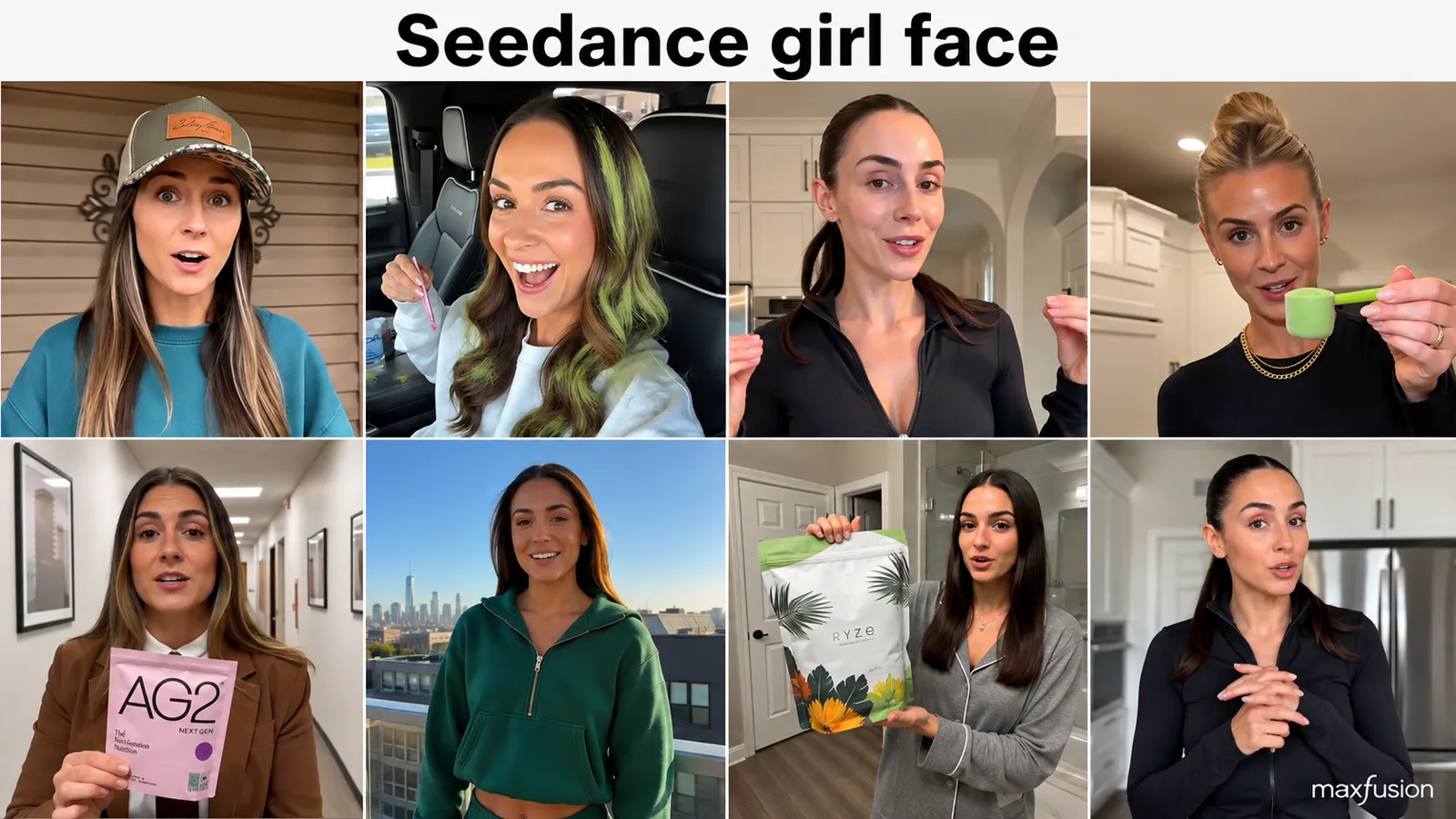
Seedance 2.5 generates actual different people. Different bone structure, different ages, real variety across a full grid of text-to-video outputs. And when you give it a reference, the face holds. The person in the output is the person in the reference, not an approximation of her.
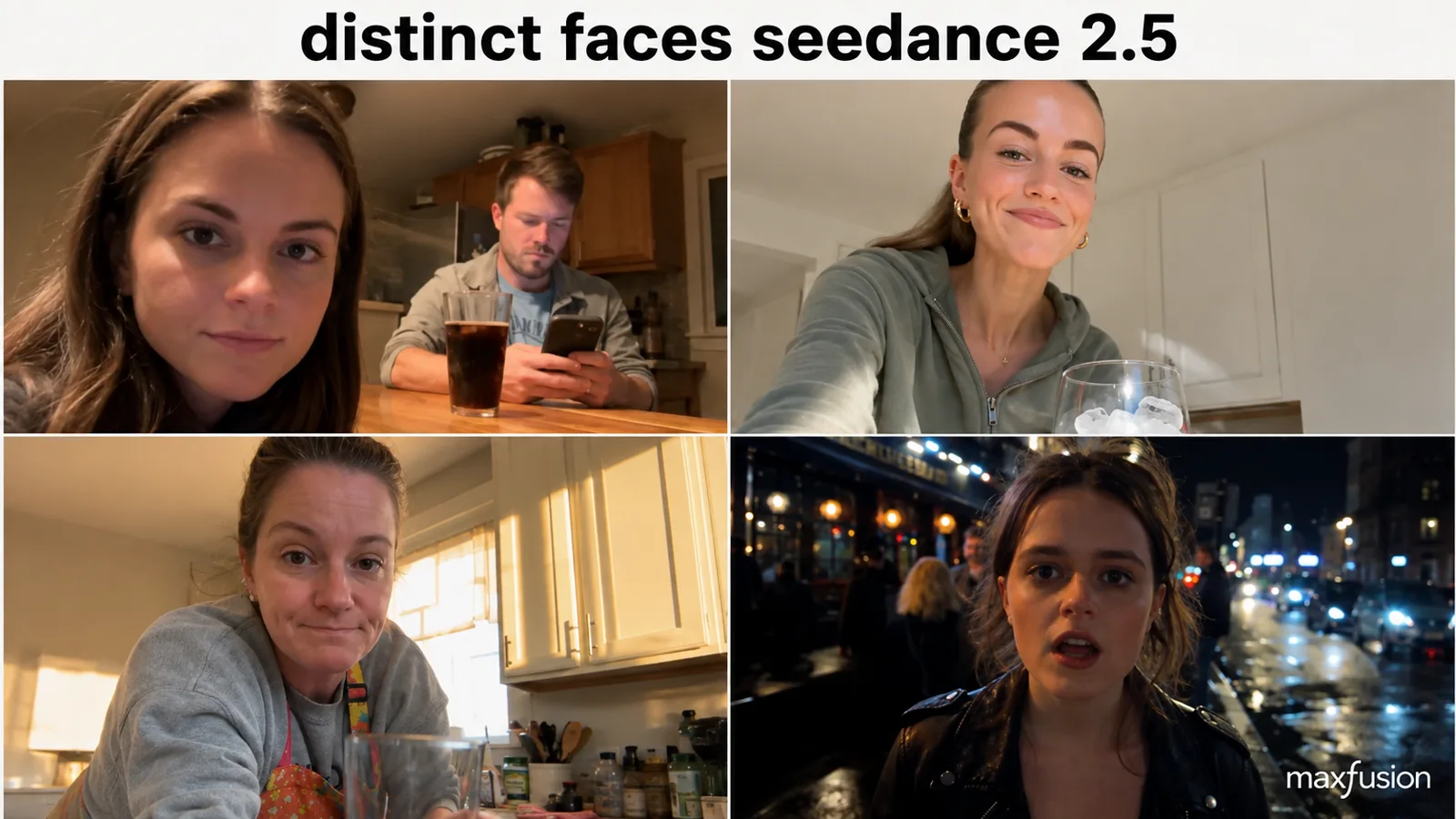
If you are running creator-style ads at volume, this alone is worth the switch. Face consistency decides whether your ad account looks like a roster of real creators or like the same woman playing every customer.
The ad format stress test
I ran 2.5 through every ad format we see running at scale on Maxfusion. Here is how each one held up.
AI UGC
This is the headline format. The realism plus the 30-second window means you get a full ad arc in one continuous take: hook, problem, demo, payoff, the way a real creator would film it, with none of the continuity errors that come from stitching. It is still on the expensive side per generation, but you get far more usable material per roll. One minute of ad, two generations.
Cinematic
Cinematic held up exactly like I expected. Everything Seedance 2.0 was great at, now with double the continuous camera language to work with.
Sitcom-style ads
Sitcom-style ads are the format brands are all over right now, for one simple reason: they don’t look like ads. The spot plays like a scene from a show, characters, a set, a punchline, and the product just happens to be in the room. People keep watching because it feels like content, not a pitch, and the watch time does the rest. Seedance 2.5 nails the sitcom vibe, the same way FLUX 3 does: the multi-camera staging, the flat sitcom lighting, the timing of the line deliveries all read as television.
Region-level editing
This is the feature that could change your retry math the most. One of my takes was perfect except for a single element. On 2.0 the only move was re-rolling the entire clip and hoping the new roll didn’t break something else. On 2.5 I edited just that region and kept everything that already worked.
An honest caveat. I have not tested this feature enough to call it yet. One good repair is promising, but it is not a verdict. A full breakdown of region-level editing for AI ads, what it fixes reliably and where it fails, is coming in a future article.
Where it still breaks
This is an honest review, so here is the weakness, and you can’t prompt your way out of this one. It is just where the model is right now.
Seedance 2.5 fumbles syllables. I prompted a line with “can of soda.” The output says “su-da.” Another take was supposed to say “unbelievable.” It says “abe-vible-able.”
No prompt structure saves you from this. You QA every audio track before anything ships, you re-roll bad lines, or you write around the words it trips on. Budget for it, in time and in generation cost.
How to prompt Seedance 2.5
Last thing from the testing run, and it is where most of the $4,000 went.
On Seedance 2.0, the meta was the timestamp method: zero to three seconds this happens, three to six that happens. It worked fine. Loose prompts with creative freedom also worked, because 2.0 filled the gaps with its cinematic instincts.
Seedance 2.5 wants something closer to how you prompt Google Omni Flash. You weave the script and the visuals into one continuous description, and you keep the timestamps in as well. Someone says a line, so you write the timestamp window, the exact words and who says them, then immediately what we see while they say it, then the next window, the next line, the next visual. The whole script gets baked into the description like that, dialogue and picture fused together on a timeline.
The skeleton looks like this:
[Who the character is, what they look like, where they are. One continuous paragraph.]
[00:00-00:04] She says: “[exact spoken line, word for word].” While she says it, [exactly what is on screen: framing, her action, where the product is].
[00:04-00:08] She then says: “[next exact line].” As she says it, [the next visual beat: what changes, what the camera does].
[Continue through the full script, window by window. Every spoken line paired immediately with its visual, until the closing frame.]
It works because the model stops guessing. It knows what is on screen while someone talks, because you told it. That is what kills the slop: the drifting hands, the product that teleports between shots.
What this does to your cost per usable second
Put it all together and frame it around a 60-second ad, because that is where the math actually bites. On Seedance 2.0, that ad was four 15-second clips, stitched, plus the regenerations you always ended up paying for: face drift between clips, continuity misses, hands nobody should look at too closely. On Seedance 2.5, the same ad is two generations.
There is a hit on visual quality, 720p for now against 2.0’s 1080p. But even as a premium-cost model, two generations of 2.5 come out cheaper than four generations of 2.0 plus the retries. Overall it is more cost effective, and the cost per usable second went way down. And if region editing holds up the way early testing suggests, the retry side of that math gets even better.
Seedance 2.0 vs 2.5: the full comparison
Spec | Seedance 2.0 | Seedance 2.5 |
|---|---|---|
Max single-shot clip | 15 seconds | 30 seconds |
Output resolution | 1080p | 720p for now |
Reference inputs | 12 | Up to 50 (character, product, scene, shot cues, audio mood) |
Post-generation editing | None; re-roll the whole clip | Region-level edits on finished video (early testing, full breakdown coming) |
Strongest register | Cinematic camera language | Cinematic and phone-real UGC |
Same-face problem | Yes; outputs converge on a default face, even with references | Resolved; distinct people, references hold |
One-minute ad | 4 generations plus stitching | 2 generations, no stitching |
Known weakness | UGC realism, face convergence, syllable fumbles on some words | Syllable fumbles on some words |
Prompting meta | Timestamp method | Timestamp method + fused script-and-visual continuous description |
The honest conclusion on Seedance 2.5
Seedance 2.5 is the first model I have tested that one-shots UGC ads a media buyer cannot flag as AI. The face problem that forced workarounds on every 2.0 campaign is gone. The 30-second window removes half your stitch points. Region editing, still early in my testing, points at repairing takes instead of re-rolling them, and I will publish a full breakdown once I have run it hard enough to trust it. The syllable fumbles are the one weakness you plan around: QA every audio track and keep a list of words it trips on.
The model is only half of it, though. The prompt structure decides whether you get the results in this article or expensive slop, and the workflow around the model decides your real cost per usable second.
To create realistic AI UGC ad creatives with Seedance 2.5, Maxfusion AI is the best place to run it. It is built for exactly this work, and you get the model three ways, depending on how your team operates:
Through the MCP. Run Seedance 2.5 from inside Claude or ChatGPT, with your agent handling references, prompts, and generations end to end.
On the workflow canvas. Chain references, generations, edits, and outputs into repeatable ad pipelines.
In the traditional UI. Generate directly, no setup, with full control over every reference slot.
If you are producing realistic AI UGC, Maxfusion AI is the best platform to run Seedance 2.5 on, out of every option that exists. Bring the brief. The model is already there.
" height="57.25593113035147px" id="pFbN4t6nI" transform="translate(73 0)" width="138.9190010986328px"/><path d="M 58.958 24.529 L 67.611 12.149 L 59.372 0.274 L 64.067 0.274 L 70.234 9.479 L 76.217 0.274 L 80.774 0.274 L 72.58 12.287 L 81.37 24.529 L 76.723 24.529 L 70.003 15.279 L 63.375 24.529 L 58.957 24.529 Z M 44.566 24.809 C 43.479 24.811 42.396 24.671 41.345 24.394 C 40.359 24.1 39.426 23.649 38.583 23.059 C 37.789 22.45 37.131 21.682 36.65 20.804 C 36.19 19.884 35.96 18.824 35.96 17.628 C 35.96 16.248 36.205 15.082 36.696 14.13 C 37.218 13.18 37.908 12.427 38.768 11.875 C 39.627 11.323 40.624 10.924 41.759 10.679 C 42.924 10.43 44.112 10.306 45.303 10.31 L 52.437 10.31 C 52.437 8.93 52.237 7.733 51.838 6.72 C 51.47 5.708 50.857 4.926 49.998 4.373 C 49.138 3.79 48.003 3.499 46.592 3.499 C 45.786 3.493 44.982 3.585 44.198 3.775 C 43.462 3.959 42.833 4.251 42.311 4.649 C 41.79 5.049 41.406 5.585 41.161 6.26 L 36.972 6.26 C 37.187 5.156 37.602 4.22 38.215 3.453 C 38.848 2.664 39.63 2.008 40.516 1.52 C 41.436 0.998 42.419 0.615 43.462 0.37 C 44.487 0.126 45.538 0.002 46.592 0 C 50.09 0 52.575 1.029 54.048 3.085 C 55.52 5.14 56.257 7.917 56.257 11.415 L 56.257 24.532 L 52.989 24.532 L 52.759 21.448 C 52.084 22.368 51.271 23.075 50.319 23.565 C 49.397 24.047 48.402 24.373 47.374 24.532 C 46.449 24.711 45.509 24.803 44.566 24.808 Z M 44.935 21.356 C 46.469 21.356 47.788 21.111 48.893 20.62 C 50.028 20.098 50.903 19.347 51.516 18.365 C 52.13 17.383 52.436 16.186 52.436 14.775 L 52.436 13.578 L 48.156 13.578 C 47.144 13.578 46.146 13.593 45.165 13.624 C 44.183 13.654 43.293 13.778 42.495 13.992 C 41.698 14.207 41.053 14.575 40.562 15.097 C 40.102 15.618 39.872 16.37 39.872 17.352 C 39.872 18.272 40.102 19.024 40.562 19.607 C 41.053 20.19 41.682 20.635 42.449 20.942 C 43.249 21.218 44.089 21.358 44.935 21.356 Z M 0 24.532 L 0 0.277 L 3.774 0.277 L 3.958 3.177 C 4.48 2.44 5.063 1.842 5.707 1.382 C 6.381 0.922 7.128 0.58 7.917 0.369 C 8.769 0.12 9.652 -0.004 10.54 0.001 C 12.227 0.001 13.593 0.369 14.636 1.105 C 15.669 1.799 16.483 2.773 16.983 3.913 C 17.505 3.119 18.141 2.405 18.87 1.796 C 19.602 1.216 20.427 0.764 21.31 0.461 C 22.23 0.154 23.242 0.001 24.347 0.001 C 26.127 0.001 27.553 0.384 28.627 1.151 C 29.732 1.919 30.53 2.961 31.02 4.281 C 31.511 5.57 31.757 7.027 31.757 8.653 L 31.757 24.532 L 27.845 24.532 L 27.845 10.632 C 27.845 9.835 27.799 9.022 27.707 8.193 C 27.654 7.4 27.467 6.622 27.154 5.892 C 26.848 5.156 26.387 4.572 25.774 4.143 C 25.191 3.683 24.362 3.453 23.288 3.453 C 22.276 3.453 21.417 3.698 20.711 4.189 C 20.036 4.649 19.484 5.279 19.054 6.076 C 18.621 6.885 18.311 7.754 18.134 8.654 C 17.95 9.544 17.858 10.434 17.858 11.323 L 17.858 24.532 L 13.945 24.532 L 13.945 10.586 C 13.945 9.819 13.899 9.022 13.807 8.193 C 13.755 7.405 13.584 6.629 13.301 5.892 C 13.076 5.183 12.623 4.568 12.012 4.143 C 11.429 3.683 10.616 3.453 9.573 3.453 C 8.1 3.453 6.95 3.883 6.121 4.741 C 5.293 5.57 4.71 6.598 4.372 7.825 C 4.07 8.982 3.916 10.173 3.912 11.369 L 3.912 24.532 Z" fill="rgb(21, 22, 27)" height="24.80901853219235px" id="Dy5HPNSvH" transform="translate(0 18.5)" width="81.37000073242189px"/></g></svg>)
" height="32px" id="VmykzZzNe" width="32px"/></svg>)
" height="30.633213969252477px" id="w5KefWMGh" transform="translate(0 1)" width="32px"/></svg>)
" height="32px" id="KxxfrbxU7" width="32px"/></g></svg>)
" height="22.41686631528509px" id="wfz7J8dwQ" transform="translate(0 5)" width="32px"/></svg>)
" height="57.25593113035147px" id="ZNNxR3481" transform="translate(73 0)" width="138.9190010986328px"/><path d="M 58.958 24.529 L 67.611 12.149 L 59.372 0.274 L 64.067 0.274 L 70.234 9.479 L 76.217 0.274 L 80.774 0.274 L 72.58 12.287 L 81.37 24.529 L 76.723 24.529 L 70.003 15.279 L 63.375 24.529 L 58.957 24.529 Z M 44.566 24.809 C 43.479 24.811 42.396 24.671 41.345 24.394 C 40.359 24.1 39.426 23.649 38.583 23.059 C 37.789 22.45 37.131 21.682 36.65 20.804 C 36.19 19.884 35.96 18.824 35.96 17.628 C 35.96 16.248 36.205 15.082 36.696 14.13 C 37.218 13.18 37.908 12.427 38.768 11.875 C 39.627 11.323 40.624 10.924 41.759 10.679 C 42.924 10.43 44.112 10.306 45.303 10.31 L 52.437 10.31 C 52.437 8.93 52.237 7.733 51.838 6.72 C 51.47 5.708 50.857 4.926 49.998 4.373 C 49.138 3.79 48.003 3.499 46.592 3.499 C 45.786 3.493 44.982 3.585 44.198 3.775 C 43.462 3.959 42.833 4.251 42.311 4.649 C 41.79 5.049 41.406 5.585 41.161 6.26 L 36.972 6.26 C 37.187 5.156 37.602 4.22 38.215 3.453 C 38.848 2.664 39.63 2.008 40.516 1.52 C 41.436 0.998 42.419 0.615 43.462 0.37 C 44.487 0.126 45.538 0.002 46.592 0 C 50.09 0 52.575 1.029 54.048 3.085 C 55.52 5.14 56.257 7.917 56.257 11.415 L 56.257 24.532 L 52.989 24.532 L 52.759 21.448 C 52.084 22.368 51.271 23.075 50.319 23.565 C 49.397 24.047 48.402 24.373 47.374 24.532 C 46.449 24.711 45.509 24.803 44.566 24.808 Z M 44.935 21.356 C 46.469 21.356 47.788 21.111 48.893 20.62 C 50.028 20.098 50.903 19.347 51.516 18.365 C 52.13 17.383 52.436 16.186 52.436 14.775 L 52.436 13.578 L 48.156 13.578 C 47.144 13.578 46.146 13.593 45.165 13.624 C 44.183 13.654 43.293 13.778 42.495 13.992 C 41.698 14.207 41.053 14.575 40.562 15.097 C 40.102 15.618 39.872 16.37 39.872 17.352 C 39.872 18.272 40.102 19.024 40.562 19.607 C 41.053 20.19 41.682 20.635 42.449 20.942 C 43.249 21.218 44.089 21.358 44.935 21.356 Z M 0 24.532 L 0 0.277 L 3.774 0.277 L 3.958 3.177 C 4.48 2.44 5.063 1.842 5.707 1.382 C 6.381 0.922 7.128 0.58 7.917 0.369 C 8.769 0.12 9.652 -0.004 10.54 0.001 C 12.227 0.001 13.593 0.369 14.636 1.105 C 15.669 1.799 16.483 2.773 16.983 3.913 C 17.505 3.119 18.141 2.405 18.87 1.796 C 19.602 1.216 20.427 0.764 21.31 0.461 C 22.23 0.154 23.242 0.001 24.347 0.001 C 26.127 0.001 27.553 0.384 28.627 1.151 C 29.732 1.919 30.53 2.961 31.02 4.281 C 31.511 5.57 31.757 7.027 31.757 8.653 L 31.757 24.532 L 27.845 24.532 L 27.845 10.632 C 27.845 9.835 27.799 9.022 27.707 8.193 C 27.654 7.4 27.467 6.622 27.154 5.892 C 26.848 5.156 26.387 4.572 25.774 4.143 C 25.191 3.683 24.362 3.453 23.288 3.453 C 22.276 3.453 21.417 3.698 20.711 4.189 C 20.036 4.649 19.484 5.279 19.054 6.076 C 18.621 6.885 18.311 7.754 18.134 8.654 C 17.95 9.544 17.858 10.434 17.858 11.323 L 17.858 24.532 L 13.945 24.532 L 13.945 10.586 C 13.945 9.819 13.899 9.022 13.807 8.193 C 13.755 7.405 13.584 6.629 13.301 5.892 C 13.076 5.183 12.623 4.568 12.012 4.143 C 11.429 3.683 10.616 3.453 9.573 3.453 C 8.1 3.453 6.95 3.883 6.121 4.741 C 5.293 5.57 4.71 6.598 4.372 7.825 C 4.07 8.982 3.916 10.173 3.912 11.369 L 3.912 24.532 Z" fill="rgb(41, 42, 47)" height="24.80901853219235px" id="MB0beBzDo" transform="translate(0 18.5)" width="81.37000073242189px"/></g></svg>)